
Keynote Speakers
Monday, 31 August
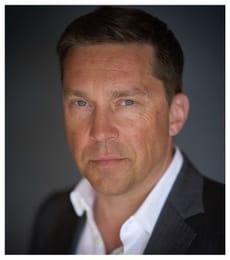
Dr. Ingo Stürmer: Cars, Robotaxis, Trucks: Systems Engineering Lessons from a Decade of Autonomy
Over the past decade, very different kinds of vehicle businesses attempted the same engineering problem: making a vehicle drive itself safely. Passenger-car manufacturers, robotaxi startups, and commercial trucking companies have each built their own answer. Looking back across all three, the most consistent finding is also the most uncomfortable: in autonomy, systems engineering is usually the bottleneck, and almost never the one anyone admits to. Drawing from direct experience inside passenger-car development, robotaxi engineering, and autonomous trucking, this keynote looks past the technology and at the engineering organizations that produced it. Where does systems engineering sit in each model? Where does it have authority, and where is it reduced to a documentation layer? Who is the right first hire in a new autonomy program — and why is it almost never a systems engineer? I will share concrete patterns from production programs: organizational setups that work, ones that don't, as well as the seams where systems engineering must hold authority. One lesson, repeated across all three domains: the org chart becomes the architecture — long before anyone writes a requirement.
Biography: Dr. Ingo Stürmer is CTO at Volvo Autonomous Solutions, leading technology development and strategy for autonomous transport. He brings over two decades of experience in autonomous system development, with previous senior roles at CARIAD (VW Group), Audi, Aptiv, Cruise, and Einride — spanning passenger-car automation, software-defined vehicle platforms, robotaxi engineering, and autonomous trucking. He holds a PhD in software engineering, focused on safety-critical software and system development, from Bundeswehr University Munich. Ingo is deeply engaged with the question of how established industries move from autonomous prototypes to industrial-scale production and operations. He is based in Gothenburg, Sweden.
Tuesday, 1 September
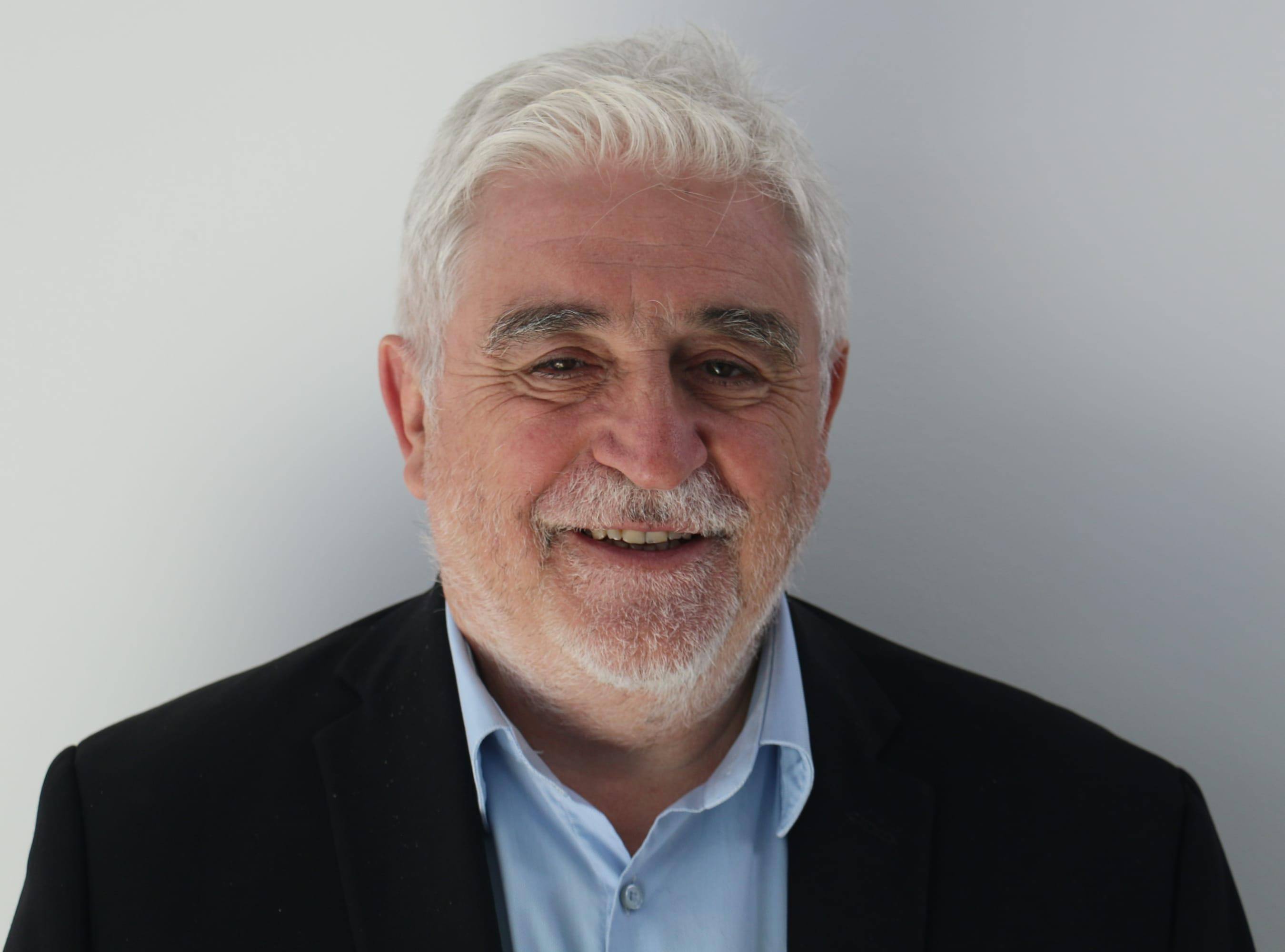
Professor Emeritus Guy André Boy: On the Complexity of Context in Human Systems Integration
Context is at the heart of the systemic cognition framework that supports human systems integration (HSI). We cannot discuss a sociotechnical system (STS) without considering the contexts in which it is designed, developed, validated, operated, maintained, and ultimately dismantled. This is why we need a clearer understanding of what we mean by “context” in STS design and operations, for example. The central assumption of the systemic cognition framework is that we gradually become familiar with the complexity of an STS through the creation and refinement of conceptual models in context. This process is incremental and integrative (i.e., anytime emerging behaviors, phenomena, and properties are discovered from experience, they are integrated into the STS at work). Concept models in context (CMC) are not only limited to providing a situated framework for operations people, but they also guide engineering people in HSI. Therefore, how can we figure out relevant contexts? How can we model them? How do we integrate them into the systemic cognition framework as CMCs to support HSI? More specifically, how are systemic cognition resources (SCRs) framed and articulated by context? This article proposes a constructivist approach for building CMCs that encompass the entire life cycle of an STS and are useful for tangibility testing and traceability. Documenting CMCs is helpful throughout the life cycle of an STS (i.e., from design to operations to dismantling). Several examples will be used to support the CMCs being developed.
Biography: Professor Emeritus Guy André Boy held the FlexTech Chair at CentraleSupélec (Paris-Saclay University) and at the ESTIA Institute of Technology in France. Fellow of INCOSE, the Air & Space Academy, and the International Academy of Astronautics. Former Chief Scientist for Human-Centered Design (HCD) at the IPA at NASA’s Kennedy Space Center. Former Dean and Director of the HCD Institute at the Florida Institute of Technology. Former President and CEO of the European Institute for Cognitive Science and Engineering (EURICO). Former Group Lead at ONERA (The French Aerospace Lab) and NASA Ames Research Center. He is currently a visiting scholar at ISAE-SUPAERO and ESTIA.
Wednesday, 2 September
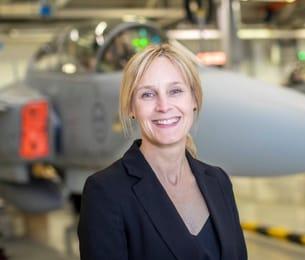
Annika Meijer-Henriksson: Human-Centered Technical Leadership in Complex Systems
After more than 25 years in the development of advanced military aircraft and today as Technical Director for Gripen, I have seen that engineering success is rarely defined by technical performance alone. It depends just as much on how well our systems support the people who design and operate them.
In this keynote, I will reflect on my experience in complex aircraft development and technical leadership and how it has shaped my view of systems engineering. While we are strong in managing requirements, processes, architecture and technical interfaces, we often underestimate the role of human aspects—operators, decision-makers, and organizations—and how they influence the system.
I will share why I believe we need to move toward a more human-focused approach in development of complex systems. From a leadership perspective, this means creating alignment, trust and collaboration across disciplines, decision-makers and operators.
Ultimately, my message is that the future of engineering is about empowering humans through technology, not replacing them—designing systems where people and technology work as a team. This calls for a new form of technical leadership where success depends as much on communication, trust and collaboration as on technical skill.
Biography: Annika Meijer-Henriksson is an experienced leader in the design and development of military aircraft with over 25 years of experience in complex development.
She has worked in several areas of aircraft development and has spent most of her career as a chief engineer on various military aircraft platforms.
With a strong interest in methodology for developing complex systems, systems engineering and Technical Leadership Annika has a drive to share an develop her knowledge in development of complex system. She combines technical expertise with strategic leadership to drive successful development projects.
As Head of Design for Gripen, she leads the work at Saab to ensure that the Gripen aircraft meets the requirements for safety, performance, innovation and quality.
Annika is passionate about developing sustainable and efficient solutions that meet the needs of the future, while inspiring and engaging the organization to achieve its common goals.
Masters of Ceremonies and Facilitators
Johanna Wallén Axehill (Saab) and Tom Strandberg (CAG)